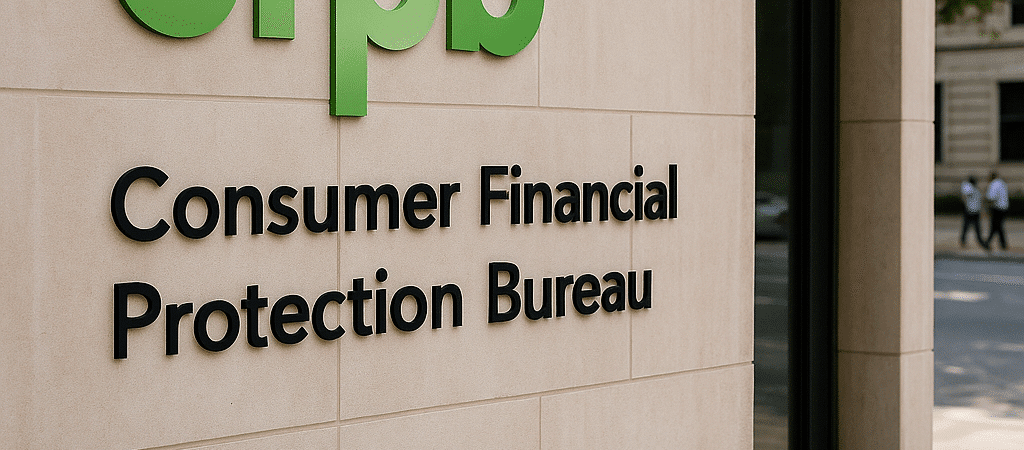
The Consumer Financial Protection Bureau (CFPB) headquarters in Washington, D.C., is pictured on August 29, 2020. WASHINGTON, Nov 11 (Reuters) – The U.S. Consumer Financial Protection Bureau is expected to propose changes soon that would narrow a significant aspect of fair-lending regulations established during the civil rights era, as part of an overhaul by the Republican administration under President Donald Trump aimed at reducing regulations it deems burdensome for businesses, according to two knowledgeable sources. This adjustment to the CFPB’s implementation of the 1974 Equal Credit Opportunity Act (ECOA) follows Trump’s April executive order directing federal regulators to minimize regulations that impede policies intended to prevent unintentional discriminatory effects. By limiting the so-called ‚disparate impact‘ liability—often seen in employment-related cases—the administration would revoke a longstanding governmental tool for addressing racial and gender discrimination in various sectors, including housing, education, and lending. Congressional Democrats have criticized the Trump administration’s efforts to roll back disparate impact enforcement, claiming it disregards the historical context and ongoing realities of discrimination, potentially causing harm to the public. The White House argues that forcing companies to avoid discriminatory outcomes fosters favoritism and imposes undue burdens on businesses, a viewpoint contested by consumer advocates who argue that it is an essential mechanism for combating deep-rooted discrimination in finance and housing. Though the CFPB did not respond to requests for comment, sources indicated that the proposed changes would downplay ‚disparate impact‘ as a requirement of the ECOA and restrict the use of Special Purpose Credit Programs. These programs were previously encouraged by regulators during former Democratic President Joe Biden’s administration to help mitigate racial inequities by expanding credit access to underserved communities. During Trump’s last term, the Department of Housing and Urban Development eliminated rules against housing practices with disparate impacts, although this was temporarily halted by a court before being reinstated under the Biden administration. Stephen Hayes, a former senior CFPB attorney now in private practice, emphasized that the disparate impact legal framework has been crucial for the government to identify intentional discrimination within banks and mortgage lenders, a task that could become significantly more difficult if enforcement ends. ‚That would create a substantial gap in our ability to detect and address disparate impacts, which is vital as credit markets grow more opaque and automated,‘ he warned. ‚This has been a key reason civil rights laws like the Equal Credit Opportunity Act have worked effectively, to the extent that they have.‘ Furthermore, the disparate impact doctrine remains rooted in Supreme Court precedent, which will continue to apply to companies irrespective of regulations established by the Trump administration. The CFPB has also made modifications to rules preventing creditors from deterring borrowers from seeking credit through advertising or marketing. A court recently blocked the CFPB from reversing a settlement with a Chicago-area mortgage lender previously accused of ‚redlining‘ practices aimed at discouraging loan applications. In alignment with Trump’s April executive order, the Federal Trade Commission revised a complaint this year against an auto dealer suspected of charging Black and Latino customers higher prices, eliminating claims of disparate impact. Reporting by Michelle Price; Editing by Aurora Ellis. Our Standards: The Thomson Reuters Trust Principles.