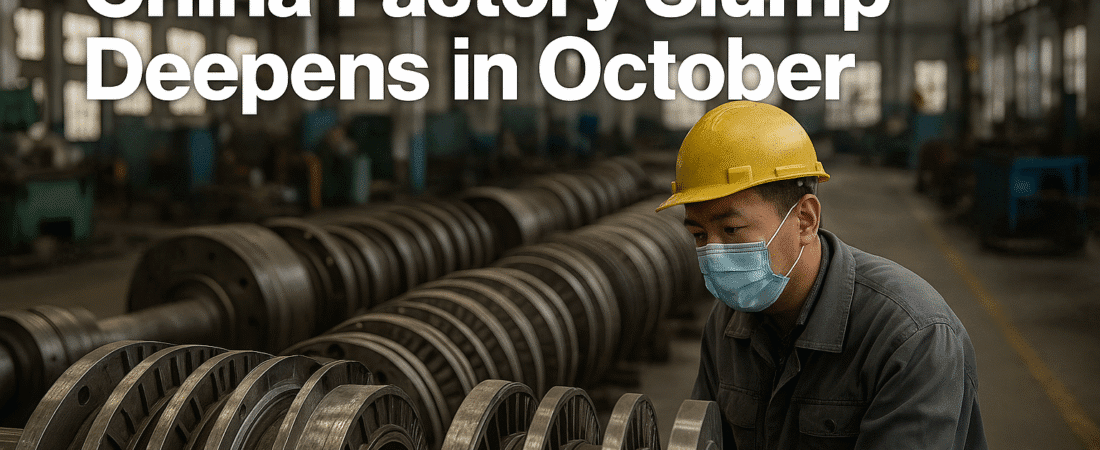
(Bloomberg) — China’s manufacturing sector experienced an intensified downturn in October, marking the longest contraction in over nine years as the economy faces a deeper slowdown as the year comes to a close. The official manufacturing purchasing managers’ index (PMI) slipped to 49 from 49.8 in September, according to the National Bureau of Statistics released on Friday. This figure fell short of the median economist forecast of 49.6. The non-manufacturing index, which encompasses activity in construction and services, edged up to 50.1 after dropping to the neutral mark of 50 in September. Seasonal factors likely contributed to this trend, as the duration of national holidays in October 2025 was longer than last year’s festivities. Huo Lihui, a statistician at the NBS, noted that the decline in factory activity was partly influenced by the extended public holiday and a ‚more complex global environment.‘ ‚Both production and market demand for manufacturing firms experienced a downturn,‘ she stated. Last month, trade tensions with the US escalated, culminated by a deal between President Donald Trump and Chinese President Xi Jinping during talks in South Korea. The alleviation of tariffs and a de-escalation in the trade conflict offers a potential reprieve for a Chinese economy that saw its growth rate slow to the lowest level in a year last quarter. While the economy is still on track to meet this year’s growth target of approximately 5%, many analysts anticipate that the final quarter of 2025 could witness the slowest growth since the disruptions caused by the zero-COVID lockdowns in 2022. Notably, the output sub-index from the manufacturing PMI has entered contraction territory for the first time since April, indicating weakened production. In addition to international risks, weak domestic demand is adversely affecting the outlook for Chinese manufacturers. Households surveyed by the central bank in the third quarter expressed decreased willingness to spend and growing pessimism about employment prospects. Although export growth has been unexpectedly strong this year, concerns linger regarding its sustainability following a surge in activity driven by preemptive stockpiling ahead of tariffs. With the trade truce now established between Xi and Trump, there is a possibility that overseas demand may begin to wane as customers may no longer feel compelled to hoard goods in anticipation of impending duties. Looking ahead, Beijing has reaffirmed its commitment to prioritizing technology and manufacturing over the next five years, coupled with a promise to ’significantly‘ increase the role of consumption in its economy. Officials plan to undertake ‚extraordinary measures‘ to achieve advancements in core technologies and tighten export controls, as highlighted in a summary of a crucial policy meeting earlier this October that focused on China’s upcoming five-year plan. (This update includes additional insights.)