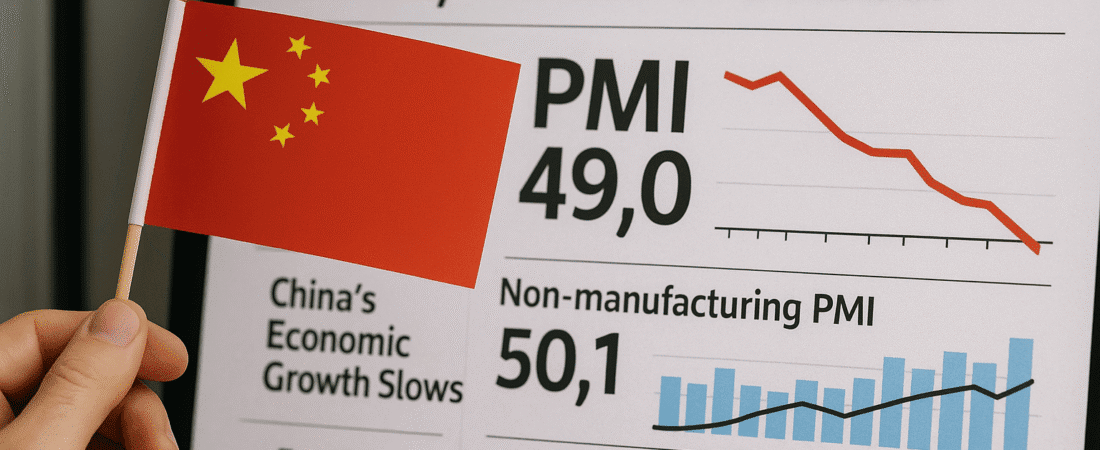
BEIJING (Reuters) – An official survey released on Friday indicated that China’s factory activity contracted for the seventh month in October, highlighting the urgent need for additional stimulus to enhance domestic demand. Simultaneously, efforts to export goods are primarily leading to price wars abroad. The official purchasing managers‘ index (PMI) dropped to 49.0 in October from 49.8 in September, marking a six-month low and remaining below the neutral 50-level that distinguishes expansion from contraction, which also fell short of the median forecast of 49.6 from a Reuters poll. In contrast, the non-manufacturing PMI, which encompasses services and construction, rose slightly to 50.1 from 50.0 in September. The ongoing downturn reflects challenges faced by manufacturers in achieving a consistent recovery in the post-COVID era, exacerbated by a costly trade conflict with the U.S. that has compelled factory owners to reconsider their strategies in the world’s largest consumer market. Additionally, exporters are finding it increasingly difficult to stay profitable in new markets, often selling at a loss in regions like Europe, Latin America, the Middle East, and Africa. While the PMI, based on business sentiment, has occasionally portrayed a bleaker economic landscape than actual hard data, with September’s industrial output and profit figures showing growth for the third and second consecutive months respectively, analysts caution that these figures may be skewed by contributions from large, state-owned enterprises. China’s economic growth decelerated to 4.8% in the third quarter, the slowest pace in a year, raising questions about Beijing’s reliance on external demand amidst escalating trade tensions, despite keeping the world’s second-largest economy on track to meet its approximately 5% growth target for the year. Following a recent four-day closed-door meeting, the ruling Communist Party committed to enhancing domestic consumption while emphasizing the need to fortify its extensive industrial framework. However, analysts express skepticism regarding Beijing’s strategies, suggesting it may revert to its conventional approach of allocating resources to large firms at the expense of smaller private producers and households. Dan Wang, the China director at Eurasia Group, remarked, „There is a noticeable decline in the private sector and small enterprises, coupled with challenges for suppliers and a shift towards automation—prioritizing machines over human labor—rather than a revival of China’s manufacturing sector.“ She noted that the private sector appears stagnant aside from emerging industries, housing remains under pressure, overdue payments are prevalent, and the threat of deflation might become a long-term concern. Some analysts argue that additional stimulus may not be necessary this year, while others advocate for accelerated infrastructure investments to maintain economic momentum in the fourth quarter. Despite these discussions, long-term concerns regarding Beijing’s capability to rebalance an economy where household consumption lags behind global averages by roughly 20 percentage points of GDP remain pertinent. Analysts surveyed by Reuters predict the private-sector RatingDog PMI to fall to 50.9 on Monday, down from 51.2 the previous month. (Reporting by Joe Cash; Editing by Sam Holmes)