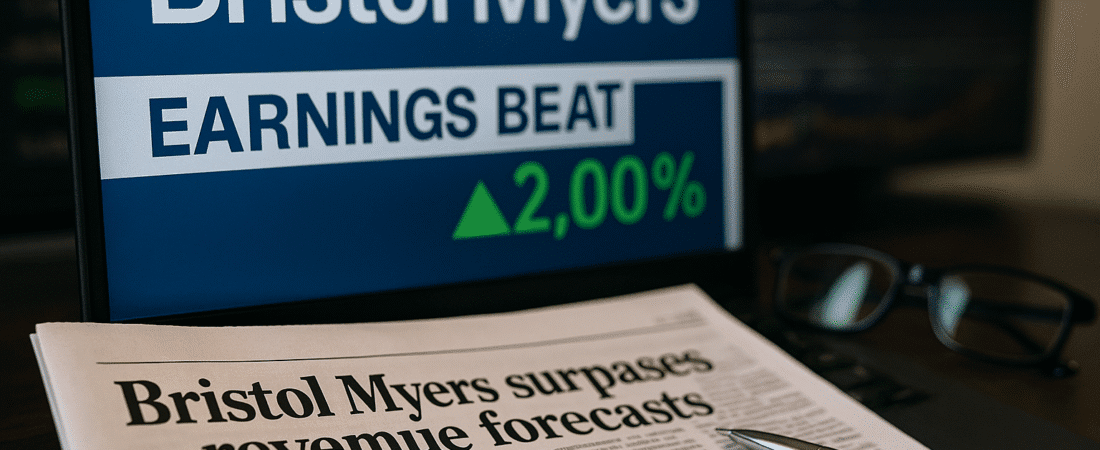
Bristol Myers Squibb outperformed Wall Street’s revenue expectations for the third quarter, primarily driven by robust sales of its cancer immunotherapy Opdivo and the blood thinner Eliquis. This performance, which saw shares rise 2% in premarket trading, enabled the company to counterbalance the impact of generic competition on several older medications. Additionally, Bristol Myers raised its full-year revenue outlook, reflecting confidence that its recently launched drugs will address a multibillion-dollar revenue shortfall from upcoming patent expirations. CEO Christopher Boerner has actively pursued acquisitions and partnerships to enhance the company’s drug pipeline. For the third quarter, Bristol Myers reported revenues of $12.22 billion, surpassing analysts‘ expectations of $11.8 billion, according to LSEG data. Adjusted earnings came in at $1.63 per share, outpacing the projected $1.51. Sales of Opdivo increased by 7% to $2.53 billion, with a newer subcutaneous formulation contributing an additional $67 million, exceeding analyst forecasts of $2.2 billion. Chief Commercialization Officer Adam Lenkowsky indicated expectations to convert 30% to 40% of Opdivo sales to the subcutaneous version before its patent expiration. Eliquis sales surged 25% to $3.75 billion, well above the anticipated $3.4 billion. Revenue from the company’s ‚growth portfolio,‘ including Opdivo and newer products like heart medication Camzyos, climbed 18% to $6.9 billion, offsetting a 59% decline in Revlimid sales, which fell to $575 million from nearly $13 billion in 2021 due to generic competition. Bristol Myers now forecasts full-year earnings between $47.5 billion and $48 billion, an increase from its prior forecast of $46.5 billion to $47.5 billion. The company faces ongoing revenue challenges with Revlimid and other cancer medications grappling with similar pressures. Additionally, Bristol Myers is responding to the Trump administration’s calls for reduced drug prices, having recently engaged in agreements with Pfizer and AstraZeneca to offer some medicines at lower prices for Medicaid in exchange for tariff relief. ‚We continue to engage with the administration,‘ Lenkowsky mentioned.