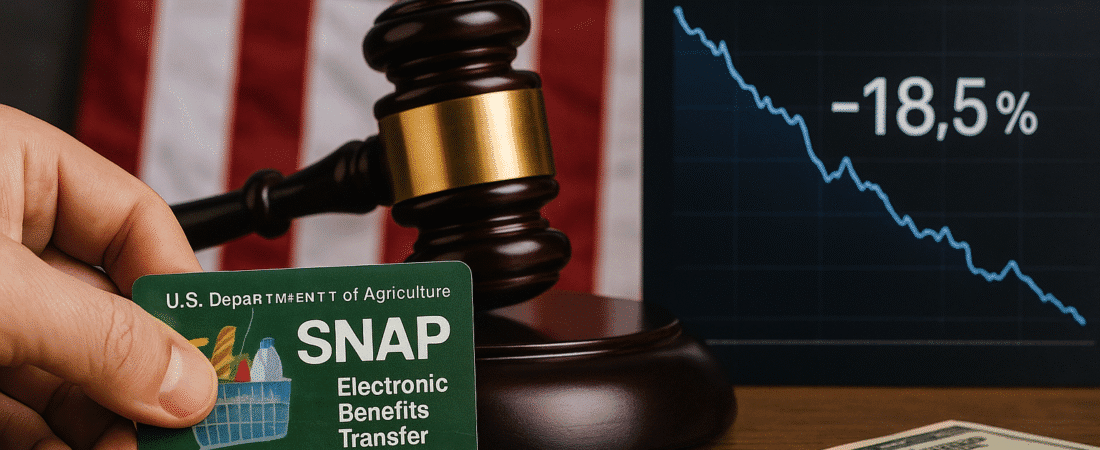
Amid the ongoing Federal Government shutdown, SNAP benefits face uncertainty, which could lead to a notable decrease in consumer spending. This reduction may consequently affect freight volumes as the shutdown persists. Current SONAR data indicates a year-over-year decline in freight volumes of 18.5%. Typically, the end of October signals the beginning of the peak season; however, recent data does not reflect a significant increase, and major companies‘ earnings forecasts suggest a similar trend. With approximately 45 million Americans depending on SNAP, many of whom live paycheck-to-paycheck and quickly utilize their benefits on essentials, the potential cessation of these payments could drastically impact freight volumes. Past analysis during the COVID era highlighted how government stimulus initiatives rapidly boosted freight demand, as those receiving such support tend to spend quickly, resulting in an uptick in supply chain activity. Currently, two contrasting narratives are emerging in the market. Local distribution for major retailers and e-commerce remains stable with volumes unchanged compared to last year, indicating that everyday retail may be faring better than expected, which could explain the Federal Reserve’s measured response to economic conditions. Conversely, long-haul freight has experienced a stark decline of 33% year-over-year, closely tied to industrial sectors such as energy, manufacturing, construction, and automotive, reminiscent of the challenges faced during the 2008 Great Recession, raising concerns about the current landscape. On a more optimistic note for trucking, market capacity is exiting more rapidly than freight volumes are falling, suggesting we may be approaching the conclusion of this freight recession. This trend could offer some relief for carriers, potentially restoring balance. However, freight brokers are encountering difficulties, as their business model relies on high volumes and spot demand, both of which are currently lacking. As the shutdown continues, the freight industry must prepare for further possible declines, while hoping for a swift resolution to keep goods—and economic activity—on the move.